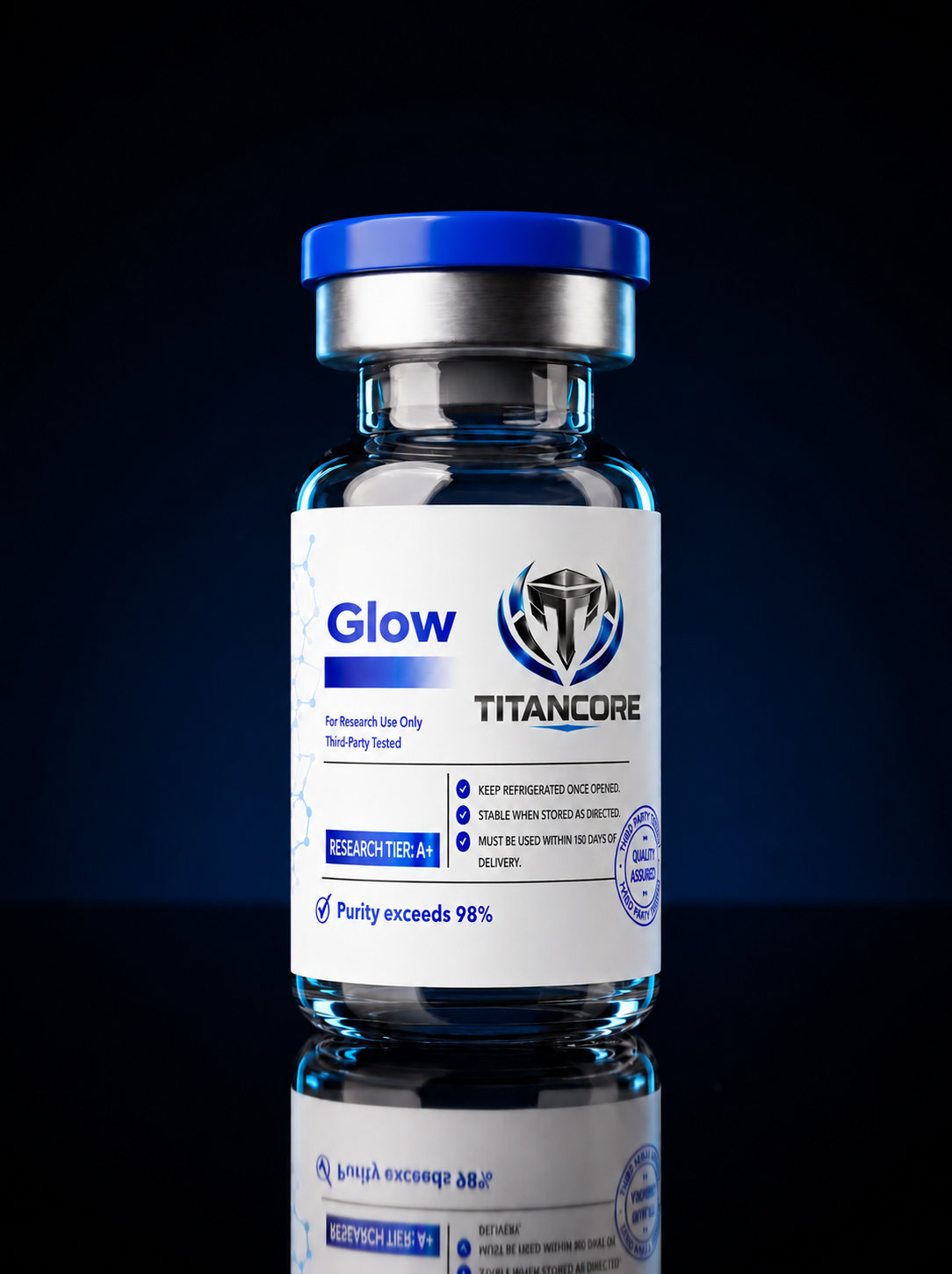
By weight, this GLOW blend peptide is mostly copper: 50 of its 70 mg are GHK-Cu, with BPC-157 and thymosin beta-4 (TB-500) at 10 mg each. Labs use the mix for matrix and repair signaling, and a 2023 study in the Journal of Cosmetic Dermatology found GHK-Cu combined with hyaluronic acid raised collagen I, IV and VII expression in human dermal fibroblasts.
The risk inside a peptide glow blend is TB4: its sixth residue is methionine, it sits beside a copper(II) complex, and copper(II) drives methionine oxidation in model peptides (Inorganic Chemistry, 2022). The oxidized chain weighs 4,979.4 Da instead of 4,963.4, a gap no purity figure sees but mass spectrometry does. One competitor GLOW report we read lists milligrams, endotoxin and sterility with no mass test at all. Titan Core's page states each of the three peptides is verified for identity and purity by mass-spectrometry-based testing before blending, with each vial's LOT tied to its third-party report; if yours isn't posted yet, ask Contact Support before opening. Lab research only; not for humans or animals.
Research Highlights
- Oxidized TB4 as its own proteoform — Nano-HPLC-ESI-MS measured oxidized thymosin β4 as a separate species across 149 saliva samples from 18 preterm infants (Children, 2026).
- TB4 delivery engineering — Because standard microneedle manufacture destabilizes TB4, researchers built a low-temperature patch holding about 248 µg that dissolves within an hour (Advanced Healthcare Materials, 2026).
- GHK-Cu release hydrogels — A food-derived self-healing hydrogel released about 62% of its GHK-Cu over 96 hours in infected-wound research (Biomaterials Research, 2025).
- More stable copper peptides — A dimeric copper peptide resisted proteases better than the monomer and reached 97.2% closure in an infected diabetic wound model in mice (Nature Communications, 2025).
- Keratinocyte inflammation models — In TNF-α/IFN-γ-stimulated HaCaT cells, a GHK-Cu plant-extract complex kept about 94% viability while being tested against Th2 inflammation (Antioxidants, 2026).
- BPC-157 after skin incision — In rats, BPC-157 raised mechanical pain thresholds two hours after incision, but the effect faded and missed phase 2 of the formalin test (Journal of Dental Anesthesia and Pain Medicine, 2022).